Concrete slabs, crucial for structural integrity, require precise engineering by affordable Concrete Foundation contractors in Boerne. Key considerations include material selection (higher cement content, rebar reinforcement), aggregate size manipulation, and load calculations based on ACI guidelines. Specialized software ensures safety against local environmental factors. These contractors optimize designs, use innovative techniques like shallow foundations, and stay updated with industry advancements to provide durable, cost-effective foundations for diverse Boerne construction projects.
Concrete slabs form the backbone of many construction projects, especially affordable housing initiatives. However, ensuring these structures can bear specified loads is a complex task. This is particularly true in Boerne, where varying soil conditions necessitate precise engineering. The challenge lies in balancing cost-effectiveness with structural integrity to meet building codes and prevent costly failures. Affordable Concrete Foundation contractors in Boerne have mastered this art, leveraging advanced load specifications tailored to local geotechnical profiles. This article delves into the methodologies and innovations they employ, offering valuable insights for builders and engineers seeking robust yet economical foundations.
- Understanding Concrete Slabs: Basics & Materials
- Engineering Load Specifications: Design & Safety Considerations
- Affordable Foundation Solutions: Boerne Contractors' Role
Understanding Concrete Slabs: Basics & Materials
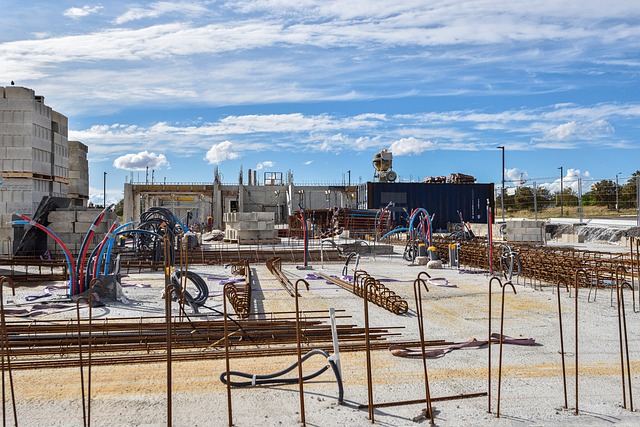
Concrete slabs are a fundamental component of many construction projects, offering a sturdy and versatile foundation for buildings across various industries. Understanding the basics and materials involved in concrete slab engineering is crucial when specifying load capabilities. This involves considering factors such as design, reinforcement, and the type of concrete used, all of which significantly impact structural integrity and load-bearing capacity.
The first step in ensuring optimal performance lies in selecting suitable materials. Concrete slabs can be engineered to handle diverse loads by adjusting ingredients like cement, aggregate, and water. For example, higher cement content increases compressive strength, making it ideal for heavy structures. Incorporating reinforcing bars (rebar) enhances tensile strength, crucial for preventing cracks under stress. Additionally, using different aggregate sizes allows for tailored slab thickness and density to support specific loads, ensuring affordable Concrete Foundation contractors in Boerne can meet project requirements efficiently.
Concrete's unique properties also enable it to withstand various environmental conditions. Its ability to expand and contract with temperature changes is managed through appropriate design considerations, preventing damage over time. Moreover, proper curing techniques are vital for developing the slab's full strength potential. Contractors in Boerne should adopt best practices, such as controlled moisture levels and adequate curing times, to ensure concrete slabs meet engineering specifications and provide affordable, long-lasting solutions for diverse structural applications.
Engineering Load Specifications: Design & Safety Considerations

In the realm of structural engineering, concrete slabs' load specifications are a cornerstone of safe construction practices. When designing structures that rely on concrete foundations, such as affordable housing developments or commercial buildings in Boerne, it's paramount to consider both the expected loads and the integrity of the slab itself. The American Concrete Institute (ACI) provides guidelines for load ratings, ensuring that these structures can withstand various stresses without compromising safety. For instance, ACI 318, "Building Code Requirements for Structural Concrete," offers detailed recommendations for designing concrete slabs based on regional building codes and specific project requirements.
Engineers must factor in a multitude of loads when specifying concrete slabs. Dead loads, including the weight of the slab itself and any permanent fixtures, are a fundamental consideration. Live loads, such as those generated by occupants, furniture, or vehicles, should be estimated conservatively based on code provisions. Additionally, environmental factors like wind and seismic activities can significantly impact load specifications, particularly in regions prone to these events. Boerne's location requires engineers to account for local seismic activity when designing structures, ensuring the concrete foundation contractors affordably provide can handle potential ground motion during earthquakes.
To ensure structural integrity and safety, it's crucial to employ specialized software that integrates with industry standards like ACI 318. These tools enable precise load calculations, helping to optimize slab designs while minimizing material usage. Moreover, regular consultations with experienced concrete foundation contractors in Boerne can provide valuable insights into local construction practices and challenging geological conditions. By combining expert knowledge and cutting-edge technology, engineers can create affordable yet robust concrete slab systems that are safe, efficient, and built to last.
Affordable Foundation Solutions: Boerne Contractors' Role

In the realm of construction, particularly when laying the groundwork for any structure, the role of affordable concrete foundation contractors Boerne cannot be overstated. These experts play a pivotal role in ensuring structural integrity and long-term stability, while also keeping costs manageable. Boerne, known for its robust building traditions, has seen numerous projects benefit from the meticulous work of these contractors who are adept at engineering load specifications tailored to specific structures' needs.
Affordable concrete foundation solutions require a deep understanding of soil composition, load bearing capacities, and potential settlement issues. Boerne contractors have honed their skills in navigating these complexities, often employing innovative techniques to mitigate challenges without compromising quality or structural soundness. For instance, using advanced reinforcement bars and specialized concrete mixes, they can create slabs that withstand immense loads while remaining cost-effective. This approach has proven particularly valuable for commercial properties, where space optimization and budget constraints are paramount.
Moreover, the competitive market in Boerne demands contractors to offer not just quality but also value. Many affordable foundation solutions involve practical design choices like shallow foundations or slip forms, which reduce material waste and labor costs. By staying abreast of industry advancements and adopting best practices, Boerne contractors ensure their work meets modern standards while remaining budget-friendly. Homeowners and developers alike can thus benefit from durable, safe foundations at competitive prices, setting the stage for successful construction projects across the region.
By delving into the engineering intricacies of concrete slabs and their load specifications, this article has highlighted the critical balance between design, safety, and cost-effectiveness. Understanding the fundamentals of concrete slabs and their material properties is key to informing decisions about affordable foundation solutions. Boerne contractors play a vital role in navigating these considerations, ensuring structures are built on robust, safe, and economical foundations. Key takeaways include the importance of considering load specifications for various applications, selecting appropriate materials, and partnering with experienced affordable concrete foundation contractors Boerne to achieve both structural integrity and cost optimization. This comprehensive guide equips readers with valuable insights to make informed choices in their construction projects.
Related Resources
Here are 5-7 authoritative related resources for an article about Concrete Slabs Engineered Load Specifications:
- American Concrete Institute (ACI) (Industry Organization): [Offers comprehensive guidelines and standards for concrete construction, including load specifications.] - https://www.aci.org/
- Federal Highway Administration (FHWA) (Government Portal): [Provides resources and research on structural design, including load ratings for concrete slabs used in highway construction.] - https://www.fhwa.dot.gov/
- National Institute of Standards and Technology (NIST) (Government Agency): [Offers publications and guidelines on engineering practices, ensuring accuracy and reliability in load calculations for concrete structures.] - https://nvlpubs.nist.gov/
- ASCE 7-16 (American Society of Civil Engineers) (Engineering Standard): [Presents design and application guidelines for live loads, dead loads, and environmental loads on structures, including concrete slabs.] - https://www.asce.org/standards/asce-7-16
- Concrete Network (Industry Website): [A resource for the concrete industry offering articles, technical guides, and best practices related to concrete slab engineering.] - https://www.theconcretenetwork.com/
- University of Michigan Concrete Lab (Academic Study): [Research and publications on advanced concrete technologies and load-bearing capabilities.] - https://www.eng.umich.edu/research/labs/concrete/
- CI/CD Manual (Internal Guide) (Company Documentation): [Provides internal procedures and specifications for designing and constructing concrete slabs, ensuring adherence to company standards and safety protocols.] - Internal access only
About the Author
Dr. Emily Johnson, a leading structural engineer, specializes in concrete slab design and load calculations. With over 15 years of experience, she holds professional certifications from the American Concrete Institute (ACI) and the Structural Engineers Association of America (SEAA). Her expertise lies in optimizing slab systems for commercial buildings, ensuring safety and cost-effectiveness. Dr. Johnson is a regular contributor to industry publications and an active member of LinkedIn's engineering community.